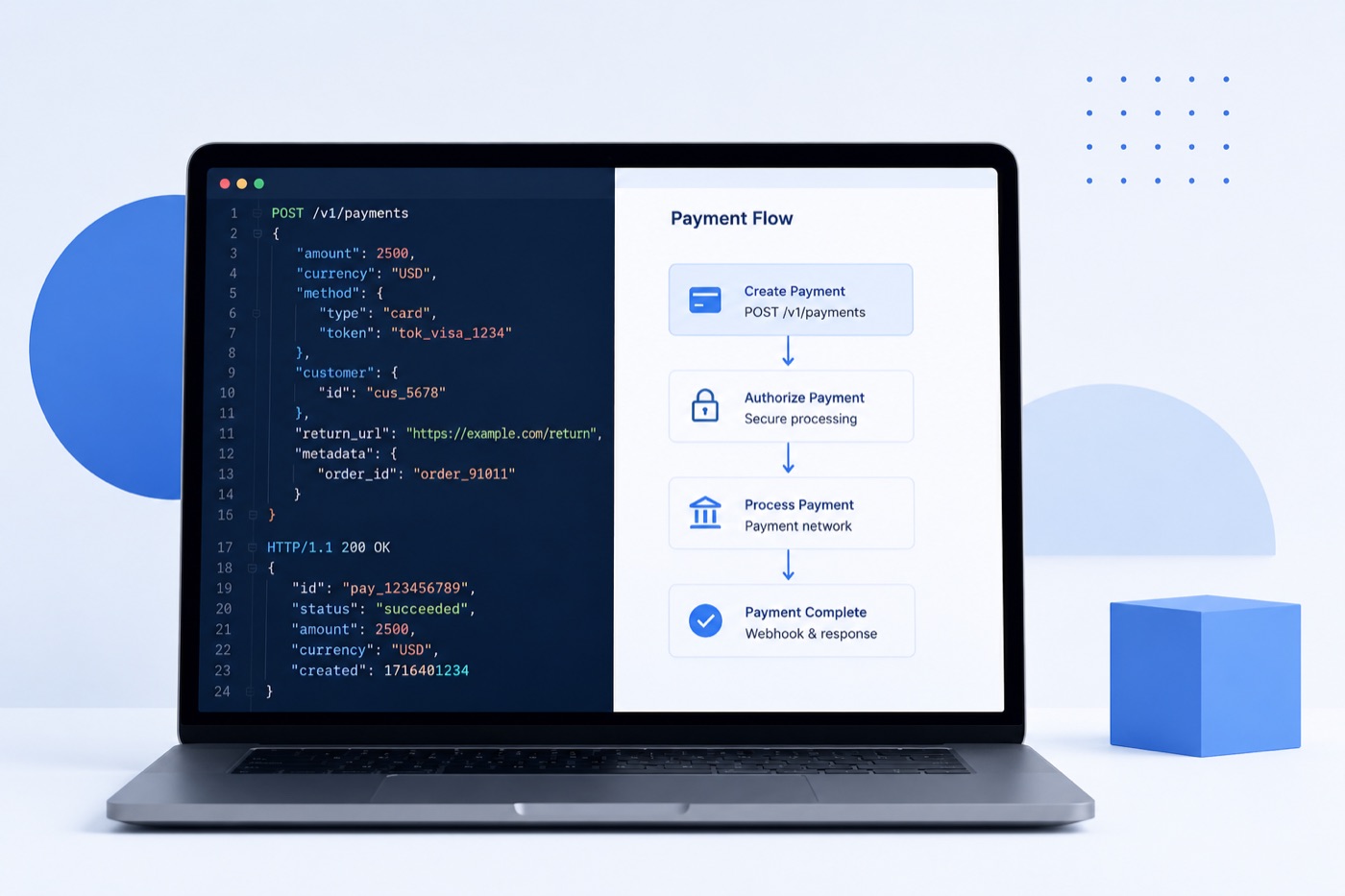
If you’re building a SaaS product or platform, your payment requirements look nothing like an e-commerce store’s. You may need to pay money out as well as collect it, embed checkout in your own UI, support multiple currencies, and automate everything via API. The right provider is built to handle that complexity, not tolerate it reluctantly.
Key takeaways
- SaaS and platforms need money out (payouts), not just money in – plus embedded payments, multi-currency and automation.
- API quality is decisive: clear auth, consistent endpoints, specific error messages and proper versioning save real engineering hours.
- Embedded payments (transacting without leaving your product) is a requirement for platform products, not a nice-to-have.
- For disbursements, look for batch payouts, API-triggered payments and a clear per-payout fee structure.
- Check supported currencies and the FX markup before they show up in your margin calculations.
Most payment provider reviews are written for e-commerce stores selling physical products. But if you’re building a SaaS product or a platform, your requirements look quite different.
You’re not just collecting one-time card payments. You might need to trigger payouts to users, build checkout into your own UI, support customers across multiple countries, or let other businesses transact through your platform. The usual “plug in a payment link and you’re done” approach simply doesn’t cut it.
Here are the questions every SaaS founder should be asking when evaluating a payment provider.
What Makes SaaS Payments Different?
Before getting into the checklist, it’s worth naming the gap. A typical e-commerce payment gateway is optimised for one flow: customer enters card details, money moves to merchant. That’s it.
SaaS and platform businesses usually need more:
- Money out, not just money in – paying contractors, vendors, partners, or users
- Embedded payments – building checkout or wallet functionality directly into your product
- Multi-currency – supporting customers and payees in different countries
- Automation – triggering payments via API rather than clicking through a dashboard
If a payment provider’s product page is entirely focused on “accept card payments,” it’s probably not built with your use case in mind.
How important is API quality, really?
Very. The API is how your product talks to the payment provider. A poorly designed API means more development time, more edge cases, and more ongoing maintenance. A well-documented REST API with clear error codes, predictable response formats, and consistent versioning saves significant engineering hours.
Before committing, your developers should look at the API documentation themselves – not just the marketing page. Specifically, check:
- Is authentication straightforward (OAuth or API keys)?
- Are endpoints consistent in naming and structure?
- Are error messages specific enough to debug from, or do they just say “something went wrong”?
- Is there a changelog or versioning system so you can plan for breaking changes?
ONE Payments offers a REST API with code examples across multiple languages, designed for teams building payment integrations into their own products. For SaaS platforms that need to route payments across multiple providers, the payment orchestration capability is worth reviewing.
What should I know about embedded payments?
Embedded payments means your users can transact without ever leaving your product – the payment experience is built into your UI rather than redirecting to an external checkout page.
This is increasingly expected in platform products. If you’re building a marketplace, a vertical SaaS tool, or anything where payments are part of the core workflow rather than an afterthought, embedded payments capability is a requirement, not a nice-to-have.
Ask any provider you’re evaluating: do you offer embedded finance tools or embedded payment capabilities for platforms? If the answer involves a lot of hedging or “that’s on our roadmap,” keep looking.
How do automated payouts work?
Most payment providers make it easy to collect money. Fewer make it easy to send it.
If your business model involves disbursing funds – to creators, sellers, affiliates, service providers – you need a provider that supports:
- Batch payouts – processing many recipients in a single operation rather than one by one
- API-triggered disbursements – sending payments programmatically based on events in your system, without manual intervention
- Clear fee structure – knowing exactly what each payout costs, before you build your pricing model around it
ONE Payments supports both batch payouts and API-triggered disbursements, which makes it viable for platforms that need to pay out at scale without a manual bottleneck.
What about multi-currency payouts?
If your platform operates across markets, you’ll inevitably need to deal with multiple currencies – both on the receiving side (customers paying in local currency) and the sending side (paying out to international contractors or partners).
Key questions to ask:
- Which currencies does the provider support for sending and receiving?
- What’s the FX conversion rate – and is it transparent?
- Are there limits on international transfers or specific corridors with higher fees?
ONE Payments supports a range of currencies including SGD, USD, EUR, GBP, AUD, JPY, HKD, and others, with FX conversion at 1% above the interbank rate. For SWIFT transfers, the flat outgoing fee is USD 28. These are the kinds of numbers you want to know before they show up in your margin calculations.
How do I evaluate a provider before committing?
A few practical approaches:
Read the documentation before talking to sales. The quality of a payment provider’s developer documentation tells you a lot about how seriously they take the developer experience. If the docs are vague, outdated, or hard to navigate – the product probably is too.
Ask for examples of platforms similar to yours. Not as a reference check, but to understand whether your use case is genuinely supported or if you’d be an edge case requiring custom workarounds.
Test the support response time. Send a technical question to their support team before you sign up. How quickly do they respond? How specific is the answer? You’ll need this relationship to work when things break in production.
The Bottom Line
For SaaS founders, the right payment provider is one that was built to handle platform complexity – not one that tolerates it reluctantly. Look for a solid REST API, embedded payments capability, flexible payout options, and transparent pricing across currencies.
ONE Payments is designed for businesses that need more than a checkout button – including platforms and product teams building payments into their core workflows.
Explore what’s possible with ONE Payments